




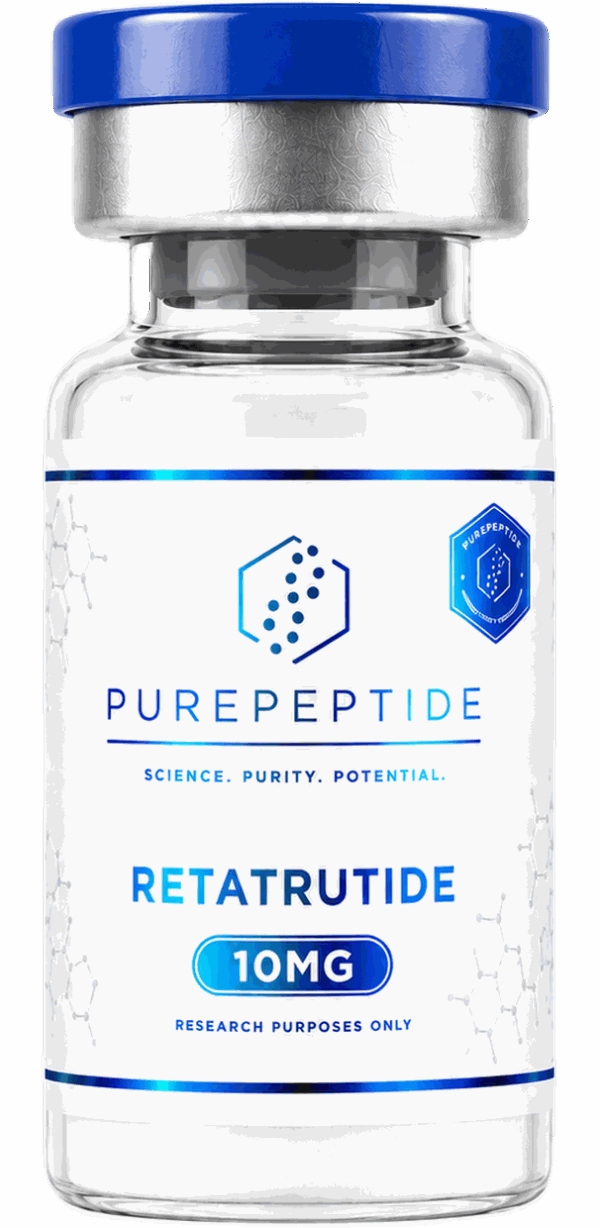
Triple GIP/GLP-1/glucagon agonist for advanced metabolic research. HPLC purity ≥ 99%. For laboratory research use only.


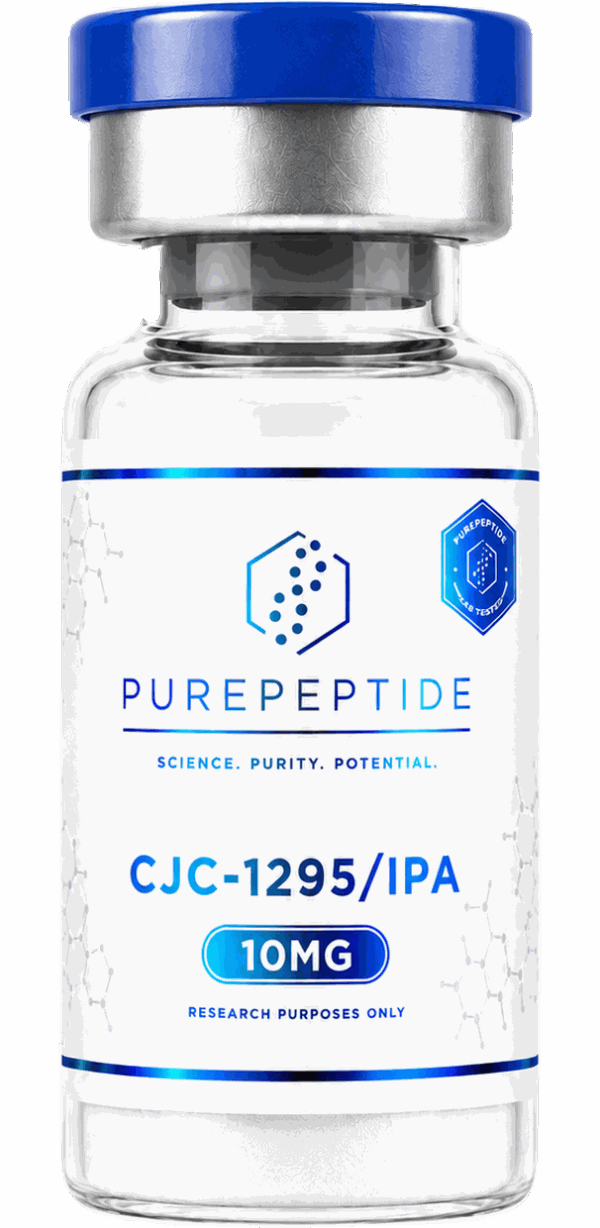
GHRH analogue (CJC-1295 without DAC) + selective secretagogue (Ipamorelin)
CJC-1295 + Ipamorelin blend studied for GH secretion. HPLC purity ≥ 99%. For laboratory research use only.
or check out instantly
For laboratory research use only. Not for human or animal consumption.
This blend combines two complementary mechanisms that are heavily studied in endocrine research: CJC-1295, a GHRH analogue, and Ipamorelin, a selective ghrelin receptor agonist. The pair is one of the best documented protocols in the literature on modulation of the somatotropic axis and pulsatile GH secretion.
| Composition | CJC-1295 5 mg + Ipamorelin 5 mg |
| Presentation | Lyophilized powder |
| Purity (HPLC) | ≥ 99% |
| Available format | 10 mg (total assay) |
| Storage | -20 °C, protected from light |
| Solubility | Bacteriostatic water / sterile water |
Dispense bacteriostatic water down the inner wall of the vial without agitation and allow dissolution to complete before use in in vitro assays. The reconstituted solution does not tolerate refreezing: divide it into single-use aliquots at preparation to avoid freeze–thaw cycles. Label each aliquot with the lot number and preparation date; store at 2–8 °C.
Triple GIP/GLP-1/glucagon agonist for advanced metabolic research. HPLC purity ≥ 99%. For laboratory research use only.
Researcher verification
PurePeptide supplies research compounds strictly for in-vitro laboratory / research use — not for human or veterinary consumption. By entering you confirm you are at least 21 and agree to our terms & conditions.